

nice alignment
the mood of mourning

The water light is blinking on my espresso machine. The teardrop shape indicates the tank is either empty or needs to be primed. But the tank is full, the filtered water from the refrigerator reaching the maximum level. I watch a video on YouTube of how to prime the internal pump of the tank and then enact my own version of this at home to no avail. A few Reddit searches later, I resolve to call the KitchenAid support number.
After pushing 2 for countertop appliances and 3 to be connected with a real person, I’m asked to locate and provide the model number and the serial number of the machine. This involves moving the machine to another spot in my kitchen, a place with a wider surface area, so I can turn the machine on its side and read the numbers off the bottom sticker that has remained intact over the last decade. But between lifting the contraption and carrying it elsewhere, the plastic water tank, still damp from being freshly filled, slips from my grip, sending the entire machine crashing to the floor.
“Oh no!” I say, my cellphone face-up on the countertop.
“What was that?” the KitchenAid representative says, his voice coming through the speakerphone. He sounds mildly concerned.
“Uhhh,” I say, unsure if I should admit that I just dropped the thing I’m trying to get them to fix. I pick it up and put all the silver parts back together. The metal frame is bent backward. A screw has become unscrewed. If I were to send this in to the manufacturer, would they know it had been dropped, or would they assume these details as normal wear and tear?
In the end, the representative tells me that KitchenAid no longer makes my model, so I can either send it in and hope for the best or use a 20% discount code to buy a new one. The discount doesn’t work on sale items. The lower-end models, the ones from which I’d be choosing, are all on summer sale. They are, even at the sale price, twice as much as the one I’d purchased a decade ago.
When I hang up the phone, I sit at my dining room table with my work-in-progress open before me. I look at my notes, and then at the clock, and then at the dying 4th of July flowers that are wilted and brown in the vase. I throw them away and dump out the dirty water. I clean the vase and put it away. I shut my laptop and pack my things away for now. I book a yoga class and change into my workout clothes. I fill up my water bottle and leave.
I’m leaving out the hour-long spiral, the cryfest that took place after I realized I wouldn’t be able to make myself a latte this morning—or ever again—until I could afford a new machine. In the grand scheme of life, it’s not a catastrophe. What upset me wasn’t the broken appliance itself, but the feeling of helplessness, the realization that I couldn’t simply replace something I loved without thinking twice. Sure, I love my vanilla-colored espresso machine. Sure, I am nostalgic for oat milk lattes I’ve barista’d myself over the years. But I’m not mourning the machine. I’m mourning the illusion that I could easily absorb one more unexpected expense.
The therapy company that had improperly billed my insurance and now I owe them money for the entire month of April; losing a personal essay class (my only slated spring class!) in May due to low enrollment; the urgent dental work I needed in June; my husband’s car needing to be fixed not once, but twice in the same week; throw in a 3-year-old sleep regression.
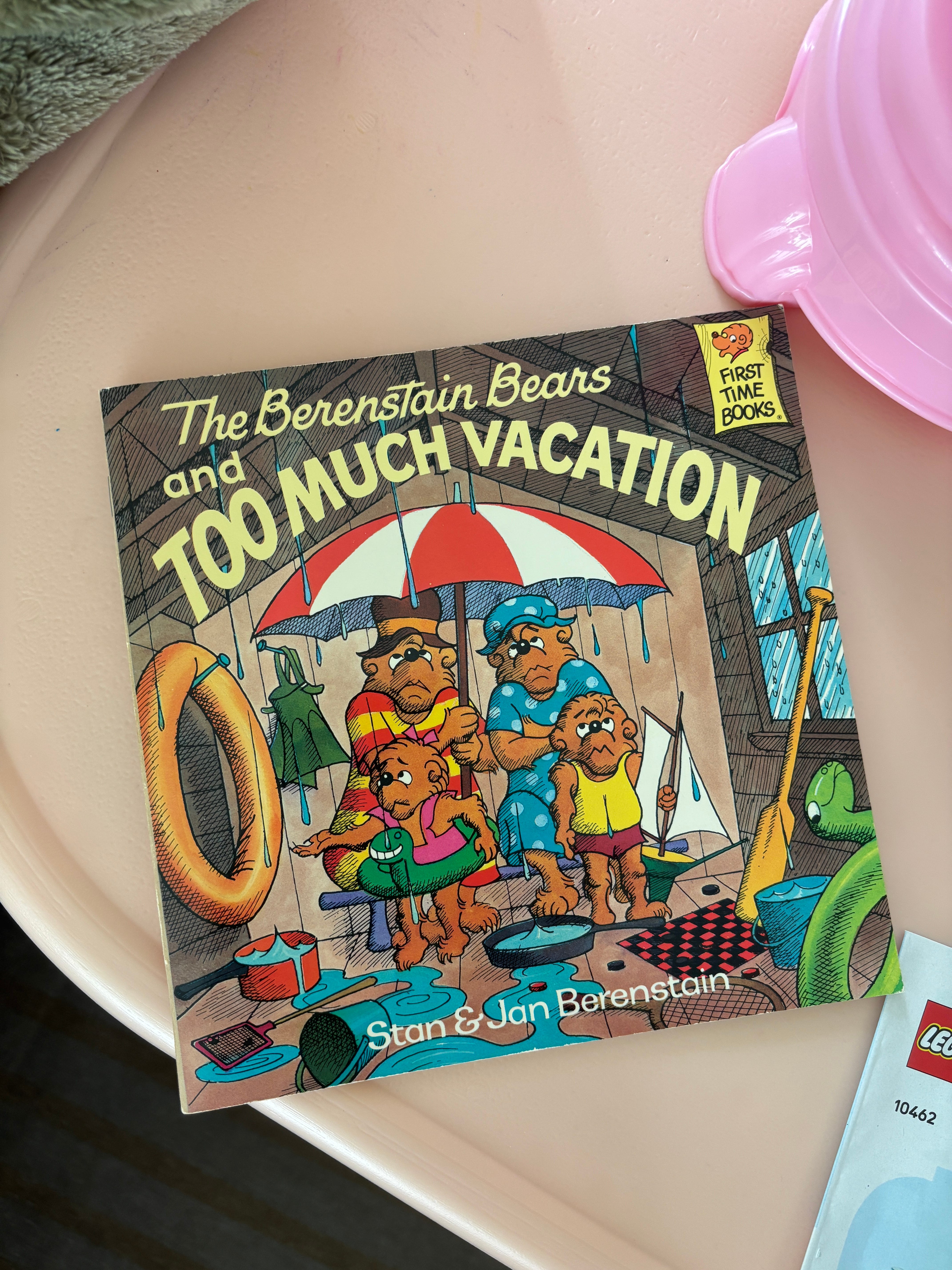
And then there’s watching all the summer travel, the family vacations and reunions and aesthetically pleasing Airbnb rentals. There are the bad jokes about needing a vacation from the vacation, but I am inside of the joke that goes I need a vacation from my own life.
Because it seems that life has become one long exercise in catching up.
*
Tammuz is the tenth month of the civil Jewish calendar, falling between June and July. Arriving in the heat of summer, it marks the beginning of the Three Weeks, a period of mourning that culminates in Tisha B’Av, the day that remembers the destruction of both the First and Second Temples in Jerusalem. The Fast of the 17th of Tammuz commemorates the breaching of Jerusalem’s walls, and the month as a whole invites reflection on moments of loss, resilience, and spiritual transformation throughout Jewish history.
Among the tragedies associated with this season is when Moses shattered the tablets of the Ten Commandments after witnessing the Israelites worshipping the Golden Calf. During the Three Weeks, many Jews observe customs that reflect this solemn period by postponing weddings and other celebrations, avoiding haircuts and the purchase of new clothes, and fasting from sunrise to sunset on the 17th of Tammuz. These practices build toward Tisha B’Av, the saddest day on the Jewish calendar.
Tammuz has a mood of mourning. We don’t always mourn one thing, but rather we inhabit a season in which every small loss reverberates. But what remains when the thing you depend on no longer holds?
At our Rosh Chodesh group last month, I heard the story of the Golden Calf for the first time, how Moses went up to Mount Sinai to receive the Ten Commandments and was gone for longer than everyone expected. Afraid he might never return, the Israelites asked Aaron to melt down their gold jewelry and make a calf for them to worship instead. When Moses finally came back and saw everyone celebrating around the Golden Calf, he was furious and smashed the stone tablets he had literally just received from God. Moses was pissed, how they all abandoned their faith so quickly. The story became a reminder of how easy it is to lose trust when we’re forced to sit with uncertainty.
“Think of an instance where you shifted your own way of seeing,” our group leader says.
I have been experiencing my own spiritual shift this past year. I’ve been coming to Rosh Chodesh for the last 6 months and have recently started going to temple services on Friday nights. I am seeking, as they say. I’m pretty lost during services, as I can’t read Hebrew and didn’t grow up with the songs and prayers. My Jewish upbringing included trips to Mother’s Bake Shop in Spuyten Duyvil for rainbow cookies. I never knew the actual words to the Hanukkah blessing, only the phonetics of the words, which I didn’t realize I had gotten mostly wrong until my 30s.
Jewish was always a state of mind rather than a destination. But the older I get, it’s a place I want to be more and more, one that requires more than the annual candle lighting and the occasional consumption of a black and white cookie from our local deli.
In seventh grade, my weekends were filled with Bar and Bat mitzvah parties, whole days booked up with morning services and evening celebrations, often two in one day, often having to choose between one or another to attend that were scheduled at the same time. The non-Jewish friends who came got a kick out of throwing candies at whoever was up at the bimah. It became a game to see how long we could stay quiet in the congregation. It was my dad who always reminded me to bring a pair of socks with me for when everyone would eventually take off their dress shoes and dance.
I was in a Jewish sorority in college. There were two on campus, two out of nineteen houses, and the one I ended up in the “cooler, yet less friendly,” of the two, according to Reddit. I met my best friend during the first week of pledgeship and we are still best friends almost 20 years later. Crazy. I chose the house because I vibed with the girls there better. I distinctly remember having a very delicious oatmeal cookie and a glass of lemonade during the final round of Rush. Maybe Judaism is somewhat based on the value of a good cookie. I had an in-depth conversation with the girl who would become my “mom” in the house about the evolution of female pop stars. In other words, I felt like I could be myself—eat the cookies and have a conversation at ease.
My brother had his Bar Mitzvah on top of Mount Masada in Israel, and that had felt like enough of a Jewish experience for the rest of a lifetime.
“I can get down with the Golden Calf,” I said to the group. The leader looked at me, puzzled at first, but then she laughed.
“No one has ever said that before,” she said. “That’s something I’m going to be thinking about for a while.”
“It’s true,” I said. “I have trouble with faith, like, the having faith part of faith, and so a literal, real, shiny object that I can see and put my trust in—that makes sense to me.”
“I appreciate your honesty,” the group leader says. “We’d all be there with you, is the thing. We must not confuse the tangible with the ultimate. We need to cling to life. L’chaim! It’s our reminder.”
My way of seeing is being shifted only now, after so many years of trying to carry the weight of all things on my shoulders. Doing it my way. Believing that if I organized my life carefully enough, I could keep disaster at bay and nothing could truly surprise me. My faith was never in God. It was in self-sufficiency, working myself to the bone, driving myself crazy. And that, too, is a kind of idol.
But I seem to have reached the edge of what my own effort can guarantee me.
*
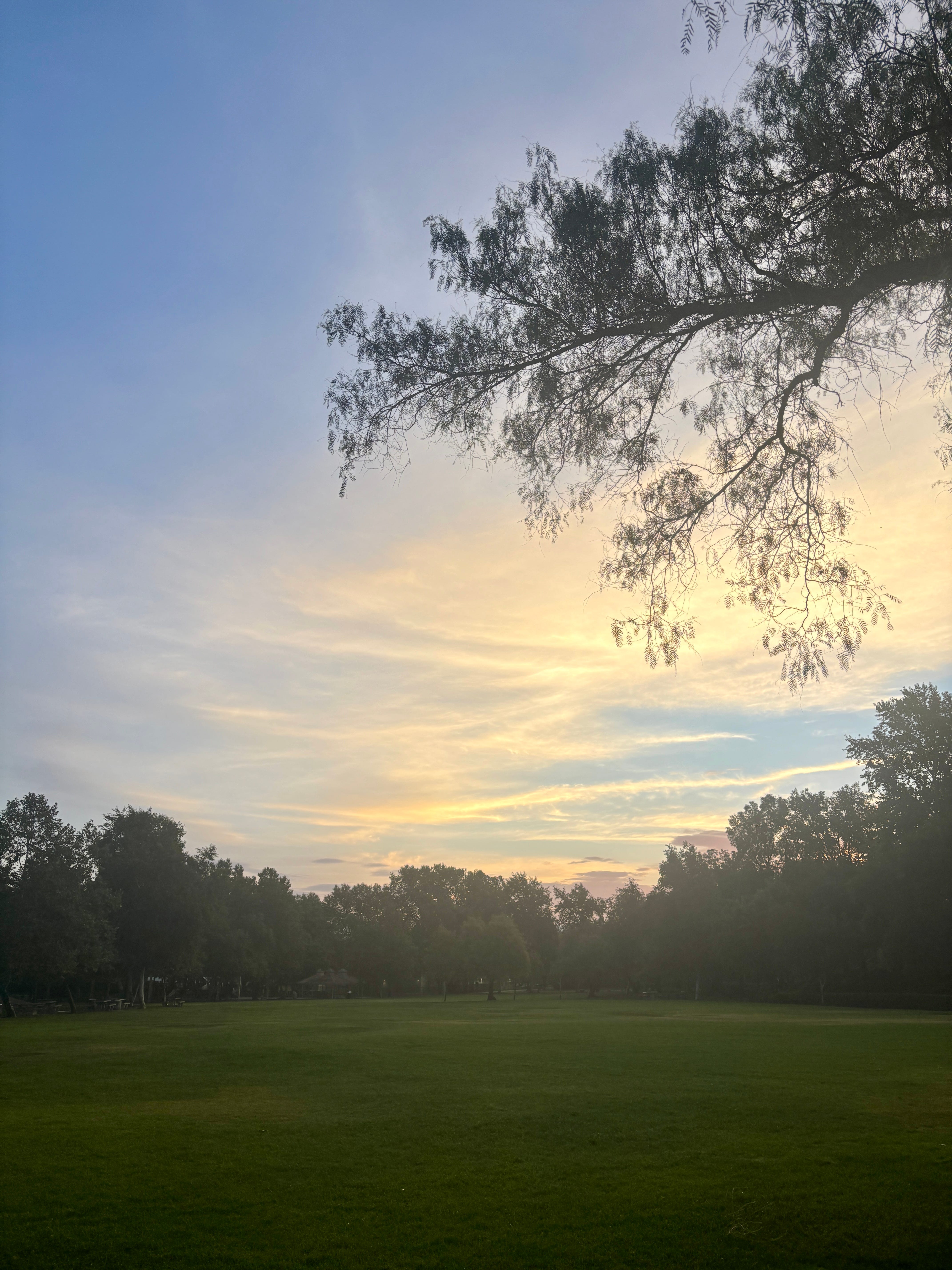
I’ve been going to the same yoga studio for 2 years since we moved back to California. I found it online and booked a 5:45am class for the morning after our inbound flight. According to my app, I have a history of 372 visits, including 23 visits in the last 30 days alone, which averages out to 3-4 times per week. All this to say, I’ve been consistent.
It’s required consistency to heal my knee injury. I only missed technically 3 weeks of yoga while I was out of commission, but I knew (or rather, the physical therapist told me) that I needed the rest and restoration in order to go back.
The day I got my X-ray, I messaged my favorite yoga teacher to fill her in on the disappointing news:
Your class is a constant that keeps me sane (well, somewhat sane) and I will be delighted to come back when it’s time. If you know anything about knee injuries and feel inclined to comfort me that I won’t be bedridden forever, inspirational wisdom is appreciated.
She responded:
Gosh, I hate hearing this! Give it a second, but I would still get on your mat daily. Meditation, whatever physical therapy lets you do, no need to lose your entire practice, it’s just going to look different for a beat, which sucks because you are so stinkin’ consistent! You will be missed but sadly the body has to heal first and strength will return. Big hugs!
That was in April, and now, here at the end of July, I’d say I’m pretty much back to all my normal activity, including this teacher’s class. I have good days and bad days, and I do think the weather affects my joints! But I’m also stronger than I was before, more aware of the muscle groups and the biomechanics, and how to make something better if something hurts. I owe a lot of this to my yoga teacher training, too. I know how to modify, how to make a practice my own.
The morning my espresso machine broke (it was broken before I dropped it, okay!?), I went to yoga. I rolled out my mat and set up my things, and when the teacher came by to say hello, I told her, I’m not having fun. She smiled because she knows, we all know what it’s like, which is why we’re all here in the same room together, and she said, “Well, you’re here. So, let’s do it.”
Halfway through the class, she put us in Warrior II and I looked in the mirror to check my form.
Heel to back arch placement, collarbones wide, gaze over my middle finger, ribs down, knee tracking forward, front hip in external rotation, breathing in and out, filling up with air and letting it go.
“Nice alignment,” she said and it caught me off guard. Me? In alignment? I checked the mirror again. Yes, I was in alignment. I had proper form. And I noticed that my body, for this brief moment, felt good.
I don’t need to achieve some higher version of myself. I can find alignment with the person I already am, with the life I’m already living.
Yes, the hard work pays off. Yes, I feel better, stronger, and yes, I also understand that through tribulation, triumph can emerge. Yes, I can heal. But I can also be okay in the meantime. Alignment doesn’t mean that everything is perfect; it means I am honest about what I need and willing to make adjustments. It means I am rooted enough to move through whatever comes next, because there is always more, always some bullshit, always some sort of pain.
There is no island of the self where harmony awaits. Harmony is something I have to practice every single day.
*
At the next Rosh Chodesh meeting, we discuss the month of Av. The month, which falls between July and August, is traditionally called Menachem Av (Av the Comforter) and illuminates a divine promise of solace and the ultimate rebuilding following the tragedies of Tisha B’Av. We transition from grief to comfort. We shift our spiritual focus entirely toward healing and redemption.
During this time, it’s customary to read through Eicha, the Book of Lamentations, as a symbol of communal mourning that moves us into a season of consolation and hope.
In the middle of the book, after pages of grief, comes a surprising turn: The steadfast love of the Lord never ceases; His mercies never come to an end; they are new every morning; great is Your faithfulness.
The world is in a consistent state of recreation. Suffering does not simply disappear. Every morning, we are asked to begin again. Jews have been able to overcome profound tragedy. We are all able to overcome profound tragedy. Our circumstances don’t have to change in order for us to find contentment. In fact, they won’t change; not all at once, not like magic. But our relationship to these things can and must change if we want to go on. And we do want to go on.
The prompts given at this month’s meeting hit very close to home.
“How has pain changed the way you understand God’s presence? What do you think God is trying to heal in you during this season?”
How has it been 9 months already since my dad passed away? The day after he passed, I went on a hike and listened to his favorite music. And then I did nothing else. I did not light candles or recite the Mourner’s Kaddish. It wasn’t until attending temple I even knew about these things. I met with the Rabbi and he told me to go to Ralph’s and buy a Yahrzeit candle, a memorial candle to honor a deceased loved one, to light it after sundown, that it would burn for 24-26 hours. The candle as a vessel that points beyond itself. The act of burning—to remember. The Rabbi suggested I get one for my husband’s father too, that we could light them together.
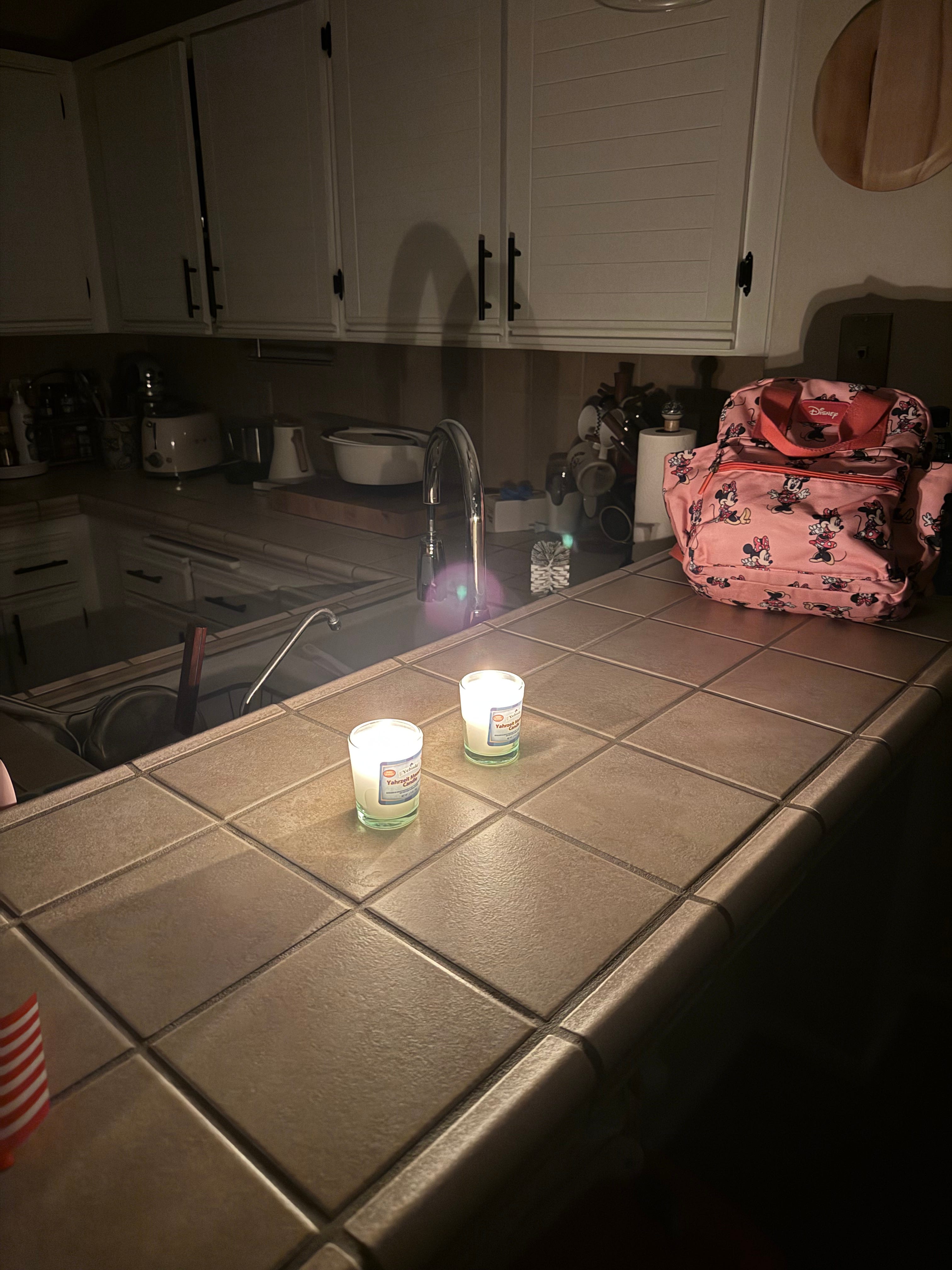
We lit our respective candles after sundown. They burned while we washed dishes and did laundry and watched an episode of Below Deck. We went to sleep, and when we woke up, the candles were still burning. They burned until after sundown, as promised.
It didn’t change the fact that my father was gone. It didn’t make me less sad. But the candle gave the grief somewhere to live besides my own body.
*
I was given a Siddur at temple last week so I could take time with the prayers, so I can become familiar, make it a part of my daily life and put it into practice.
I charge a new espresso machine to our credit card. I pick it up from Target and my husband assembles it for me. I like believing that I’ll wake up each morning and the machine will work. But I can’t really know that. There are no guarantees. But for now, it works, and I make myself a latte and sit down to write.
There is no practice that fixes grief, only practices to accompany it. Writing doesn’t fix me either. But I do it as a ritual that renews me, over and over again.
I text a friend and we catch up about personal things. I tell her how life has been challenging. She replies with support and encouragement. She ends the message with, Wishing you lots of peace!
And I think, yes, that’s it, that’s what I want—peace. Not just a smidgen, but a whole lot of peace. Except that peace is not a destination or a reward for getting everything right. Peace is also a practice. Something I can return to each day, the way I return to movement, to writing, to my coffee, to prayer.
I return with enough mercy to begin again tomorrow.

—
Very grateful for Zona Motel for giving me the space to write, “Reprise: and the fantasy versus reality of becoming a writer,” which was also featured in Memoir Land #MemoirMonday last week!
There’s still time to register for my late summer workshop: Interior Weather and the Exterior World: Rendering Inner Life, an 8-week generative class with a workshop component at Lighthouse Writers.
***Advanced copies of The Style of Your Life are making their way into the world!! If you’d like to read and review, please send me a message :)

Love these lines: I don’t need to achieve some higher version of myself. I can find alignment with the person I already am, with the life I’m already living. ❤️
beautiful 🤍